Analysis
// BRIEFS · DECODERS · SIGNALS · DISPATCHES
Evidence-based analysis across four formats. Briefs give you the landscape. Decoders show the underlying data. Signals surface short, public early-warning pieces. Dispatches are long-form investigative analysis.
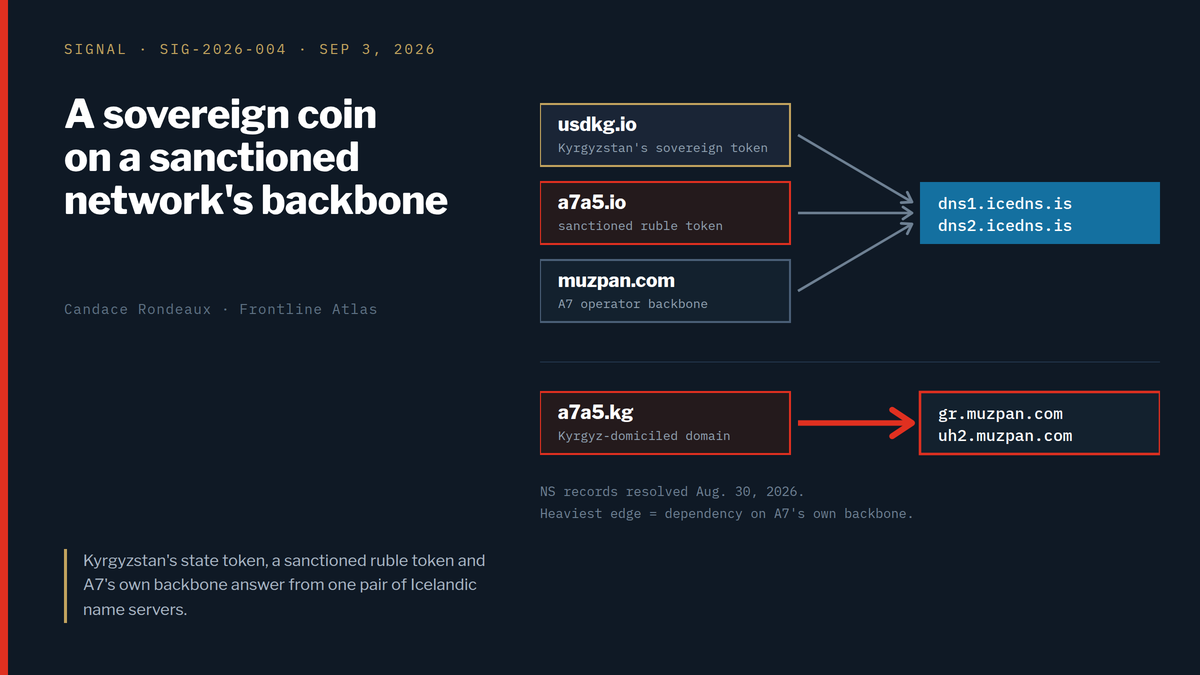
A sovereign coin on a sanctioned network's backbone
Three domains answer from the same pair of Icelandic name servers: Kyrgyzstan's state-issued USDKG token, the sanctioned A7A5 ruble token, and A7's own operator backbone. Every record was resolved on Aug. 30 and can be checked with one query.

The Russian History Kyrgyzstan Left Out of Its Stablecoin Launch
Crypto turnover in Kyrgyzstan went from $61 million a year to roughly $30 billion in three years, most of it arriving as Western sanctions pushed Russian money out of the banks. Under pressure, Bishkek began shutting companies down. It left one venture alone: USDKG, the state's own gold-backed stablecoin, sanctioned by Britain in May and still trading.

Is Russia's Sanctioned Stablecoin Actually Working?
A7A5's promoters call it a $34 billion success the West can't stop. Blockchain analysts have taken that number apart. But A7A5's more telling feature may be the interest it pays, and what that says about sanctions effectiveness.

A7A5 Rate Tracker
Russia's sanctioned ruble stablecoin, A7A5, has paid interest nearly every business day since it launched, and each payment is written to a public blockchain. Frontline Atlas reconstructed all of them and checked the record against the issuer's stated formula and the Bank of Russia's rate decisions. The formula has held through five straight resets. What backs the yield is a sanctioned Russian defense bank.

A7A5: Russia's Sanctioned Stablecoin Says It Moved $34 Billion. Much of It Went in a Circle.
We traced the crypto wallets. $31 million left one account and came back 13 minutes later. The payments business has collapsed, and the real draw appears to be the nearly 14 percent interest A7A5 quietly pays.
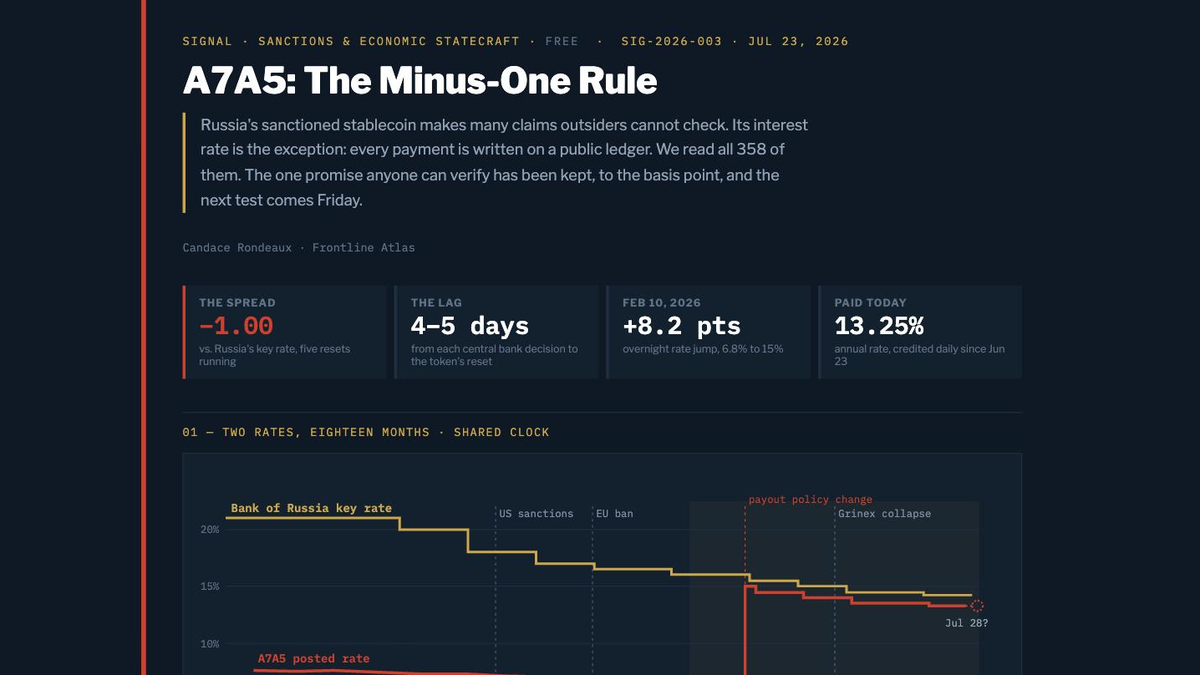
A7A5: The Minus-One Rule
Russia's sanctioned stablecoin says its interest rate follows the central bank. We read all 358 postings on its ledger. It does, to the basis point. The next test comes Friday.

A Kremlin-Backed Payments Network Shared a Dubai Address With Iran’s Arms Network
How Moscow's digital payments platform A7, Russia's shadow fleet brokers, and an Iranian oil-smuggling network became Dubai neighbors, and what it means as Washington extends its waiver to June 17.

The Wrong Question About Russian Oil
Washington's emergency crude waiver debate misses the point. The real question is what 65 days of licensed Russian oil flows built underneath — and whether that architecture can be dismantled at all.
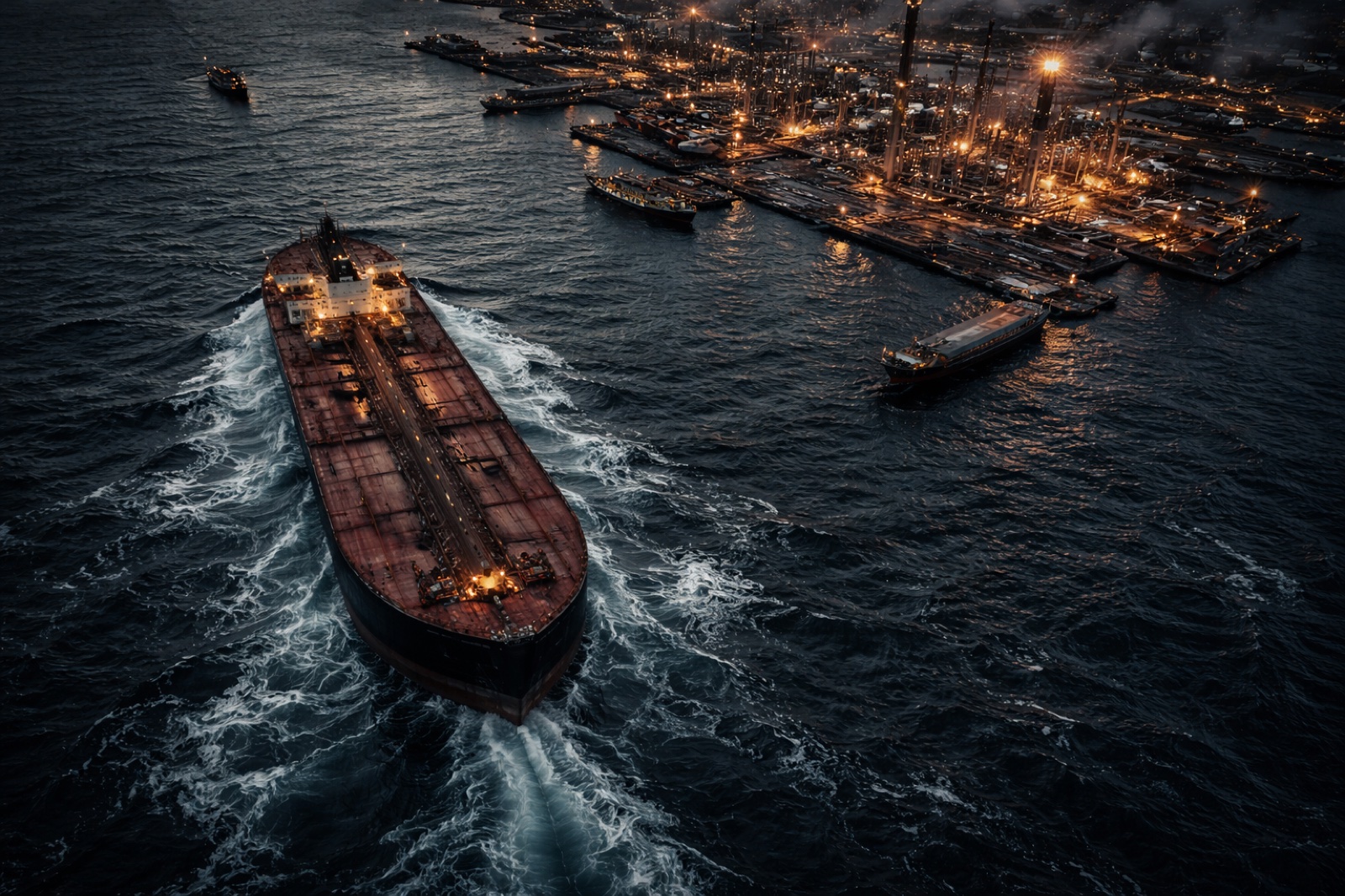
Shadow Fleet Waiver Tracker
Every vessel, every waiver, every flag change across the 30-day window when Treasury paused enforcement. The full dataset behind the Iran-war surge in Russian seaborne oil.
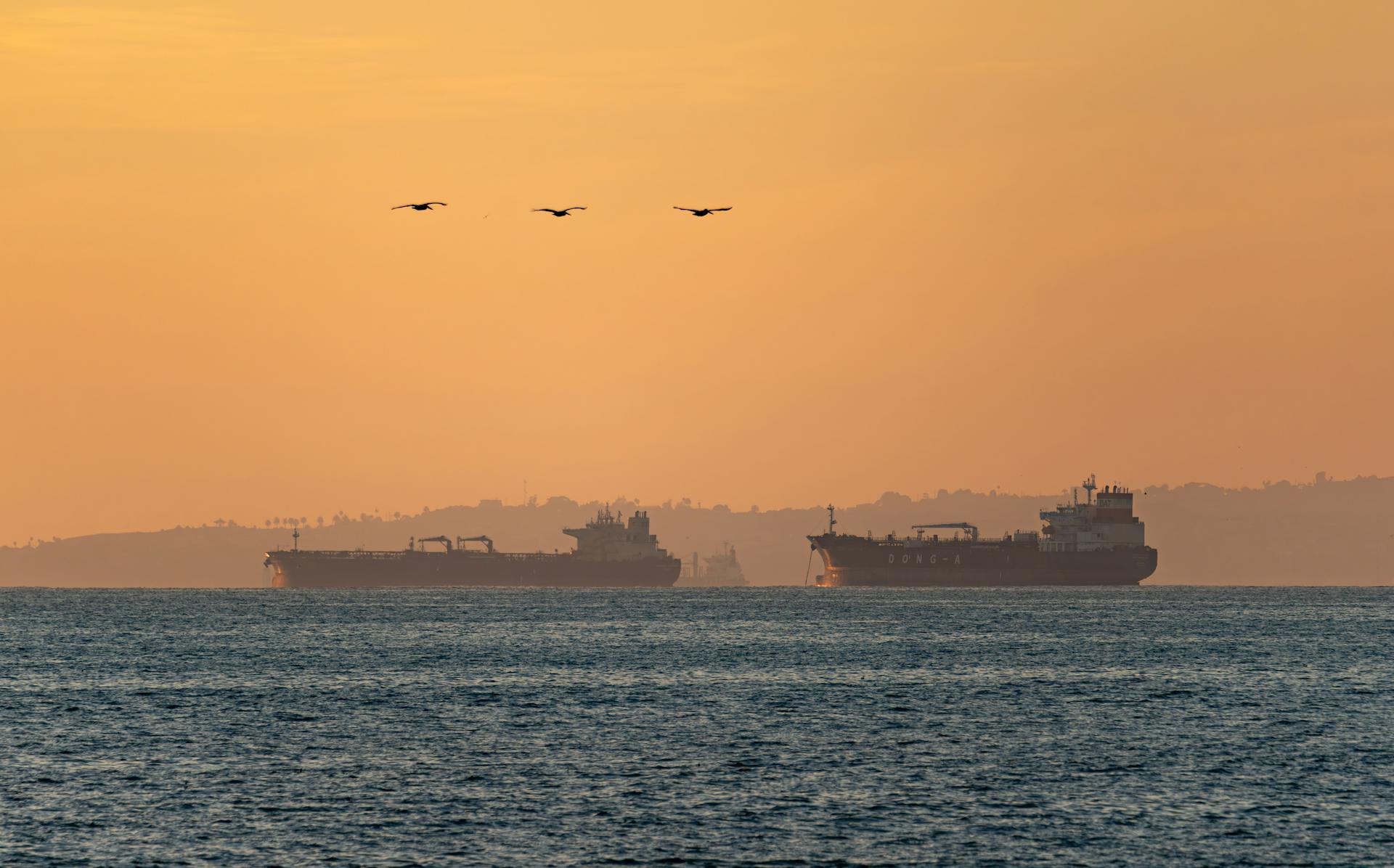
Russia’s Shadow Fleet Didn’t Beat Sanctions. It Didn’t Have To
57 million barrels of Russian oil moved during the Iran war while Treasury paused enforcement. The fleet did not outrun sanctions. The coalition that built them walked off the field.
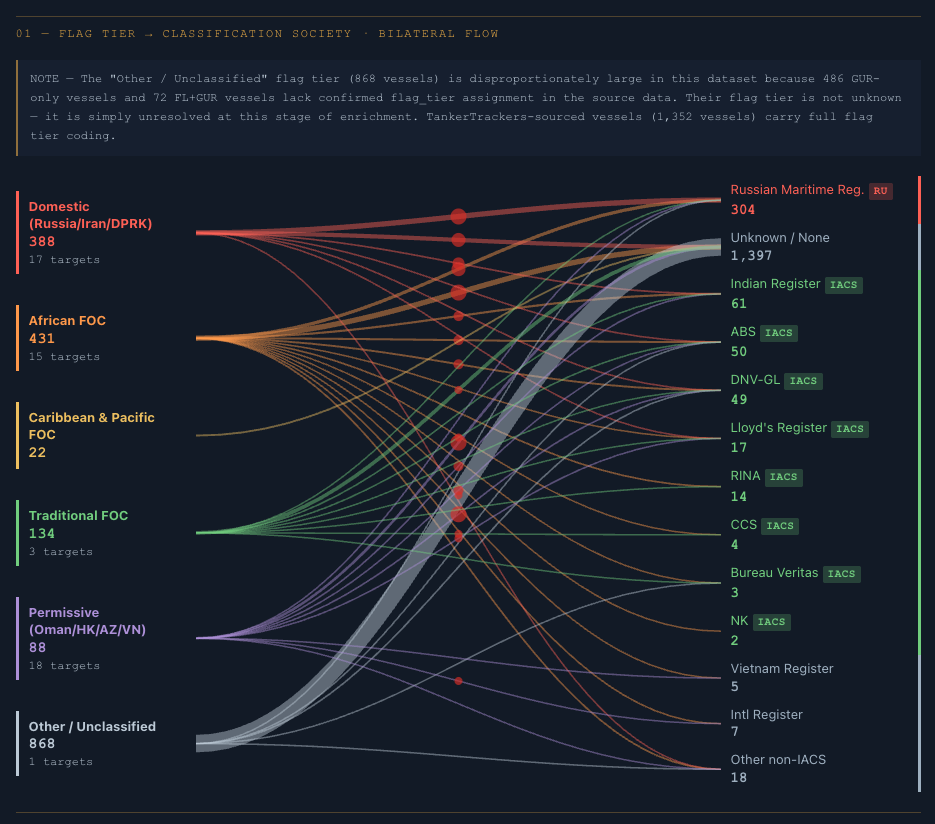
The Architecture of Evasion
1,931 vessels mapped by flag tier and classification society. The two-layer evasion structure visible across every tier of the fleet, and why Western enforcement keeps missing it.
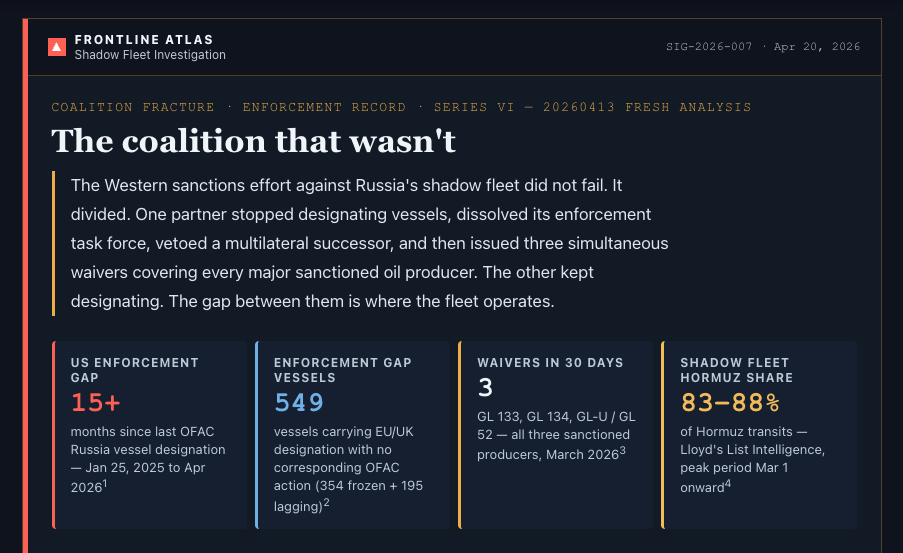
The Coalition That Wasn't
The U.S. stopped designating shadow fleet vessels in January 2025. The EU kept going. A 549-vessel gap now defines what sanctions actually cover, and what the fleet operates inside of.